This Saint’s Story
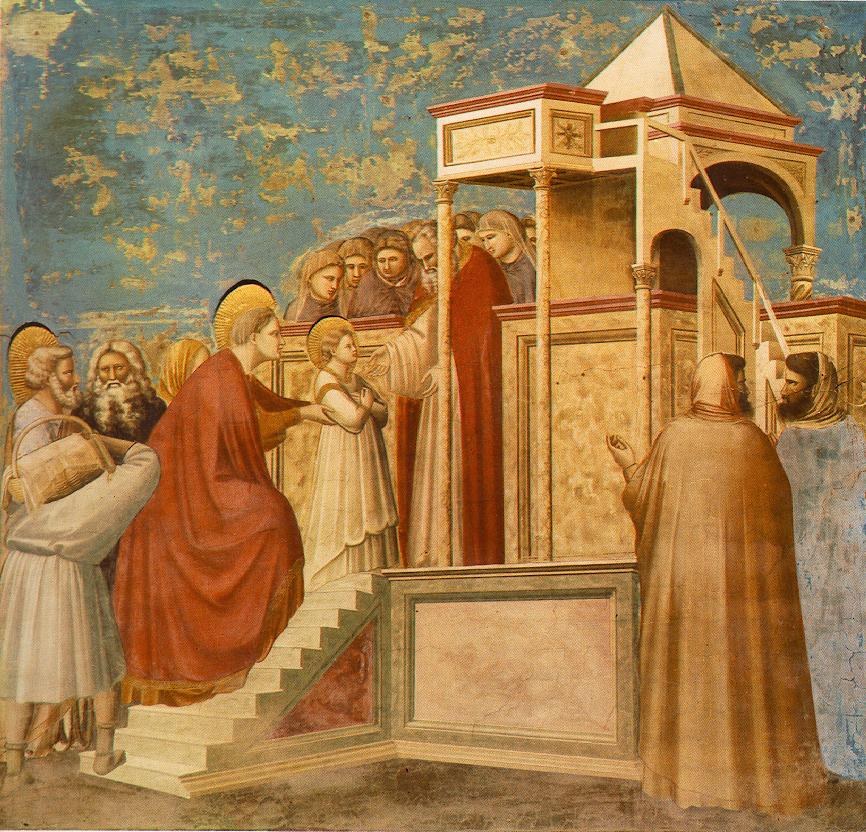
The Presentation of the Blessed Virgin Mary is kept on 21 November. In the General Roman Calendar it is a memorial. In the East it is called the Entry of the Most Holy Theotokos ('God-bearer', Mother of God) into the Temple. The Catholic Encyclopedia and Wikipedia agree that the story is not in the New Testament. It comes from early Christian writings outside the Bible, above all the Protoevangelium of James, and also the Gospel of Pseudo-Matthew and the Gospel of the Nativity of Mary.
In those texts Joachim and Anne, who had been childless, bring their daughter Mary to the Temple in Jerusalem to dedicate her to God. The later forms of the story say she was about three years old, and that her parents were fulfilling a vow. The texts go on to say she remained at the Temple to be brought up there. That sequence is an old Christian legend. It is not a report from the Gospels. The Encyclopedia lists the apocryphal (outside the Bible and not accepted as Scripture) books by name and does not treat them as Scripture.
The feast has been kept in the East for many centuries. The Latin Church took it up in the later Middle Ages and kept it through the reform of the calendar. Eastern Christians sing the entry of the Theotokos on the same date. The General Roman Calendar keeps it on 21 November.
For today: You can keep 21 November as a day of Mary and still say where the story comes from. The account stands in the Protoevangelium of James, not in the Gospels. If you want a biblical text for the day, read one of the Gospel infancy passages.