This Saint’s Story
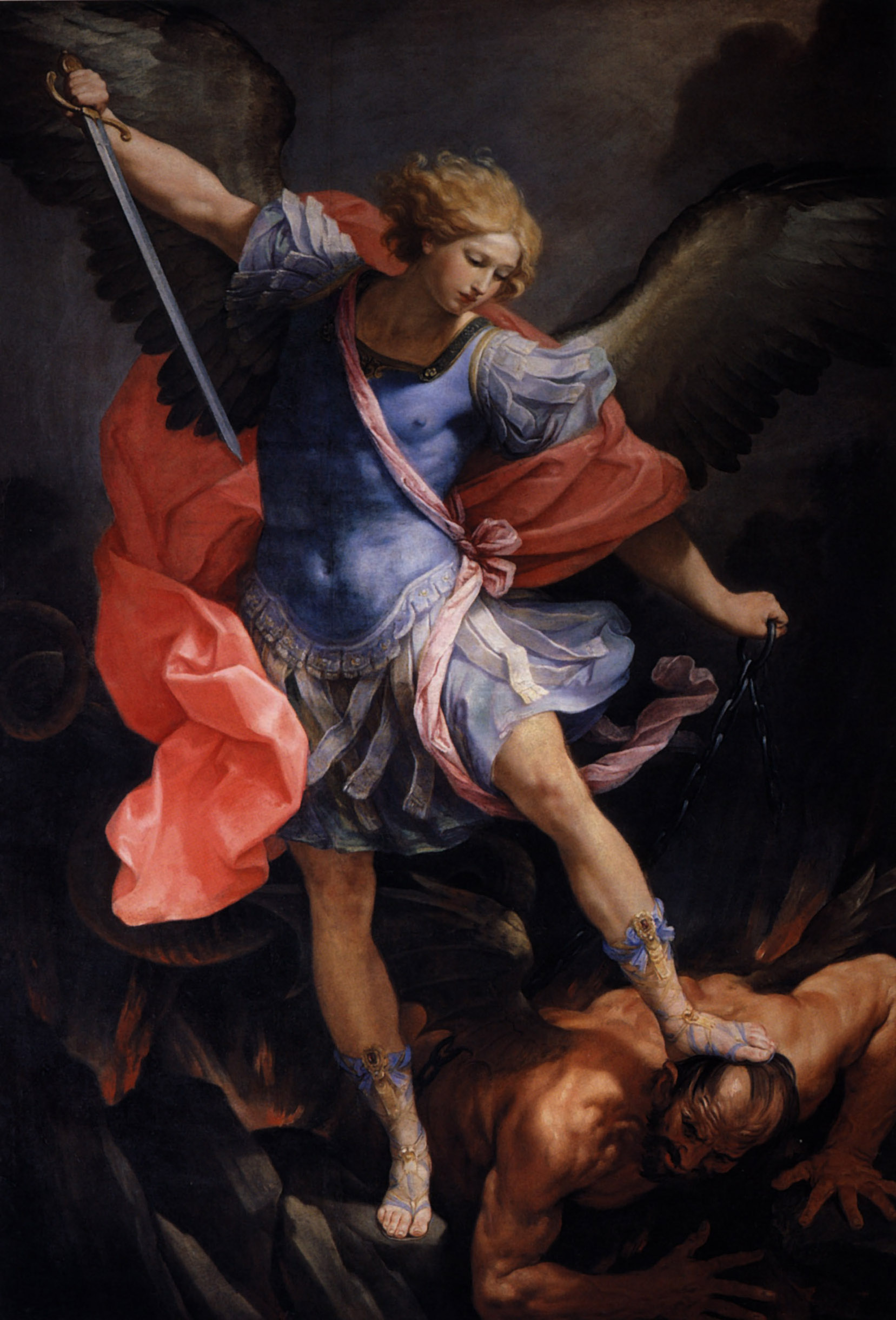
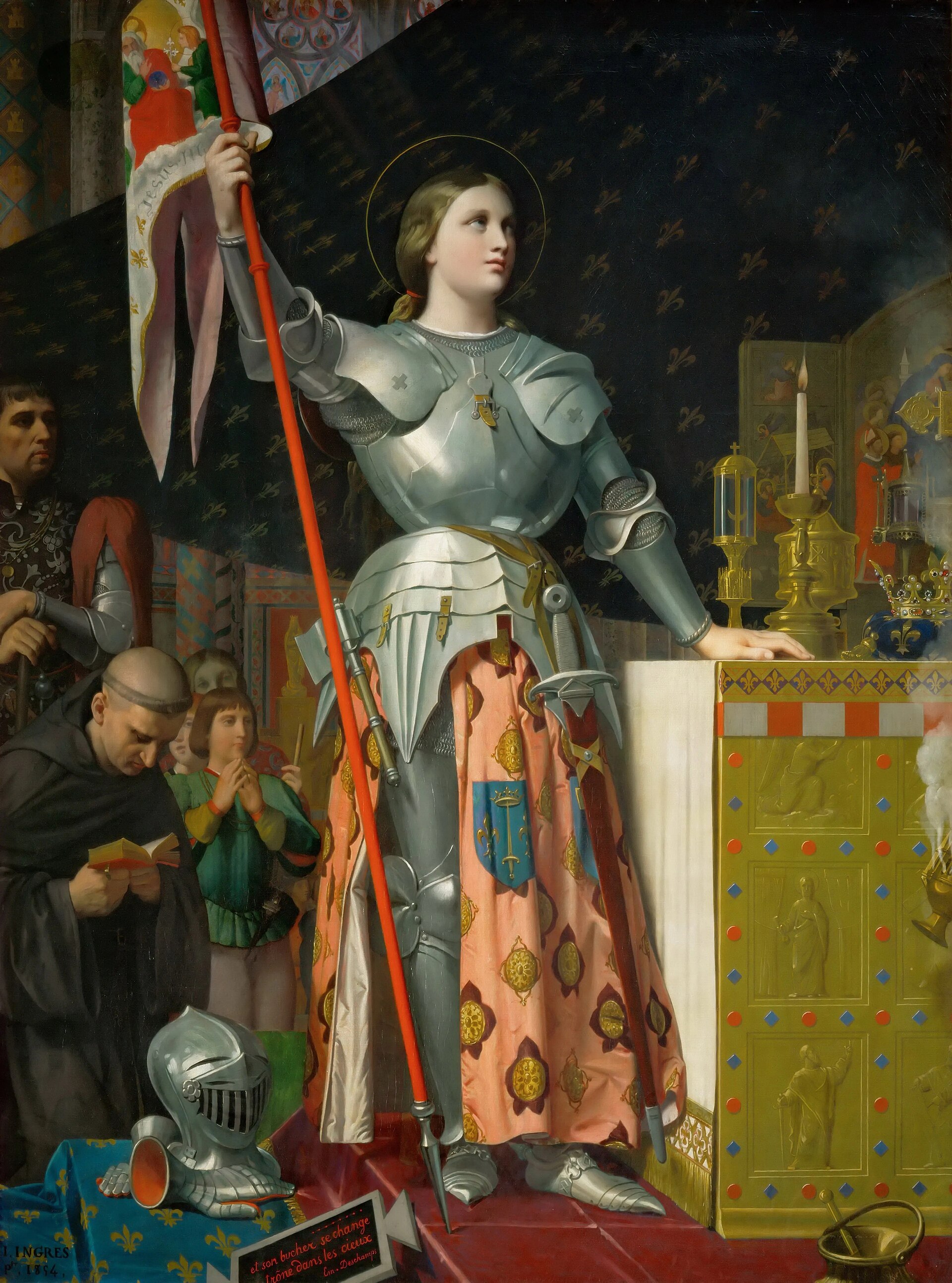
Joan was born around 1412 at Domrémy, a village on the border of Lorraine in northeastern France, to well-off peasant parents remembered as good Christians. She never learned to read or write. France was losing the Hundred Years' War (England and France's long war over the French crown, 1337–1453), and the English and their Burgundian allies held much of the north. At about thirteen Joan began hearing voices she identified as St. Michael, St. Catherine and St. Margaret. Joan made a vow of virginity, went often to Mass and confession, and came to believe she was called to help the uncrowned Dauphin (the title of the heir to the French throne), Charles.
Early in 1429, at seventeen, Joan persuaded a garrison commander to send her to Charles at Chinon. Theologians examined her at Poitiers and found nothing evil in her. On March 22 she dictated a letter to the English besieging Orléans, proposing peace; it was rejected. Sent with troops, Joan carried her banner, painted with Christ holding the world, and the siege was lifted on May 8. On July 17, 1429, Charles was crowned in Reims Cathedral with Joan standing nearby.
On May 23, 1430, Joan was captured at Compiègne and handed to the English. At Rouen a Church court led by Bishop Pierre Cauchon, with theologians from the University of Paris, tried her for heresy, focusing on her voices and her men's clothing. Asked whether she was in God's grace—a trap—Joan answered: “If I am not, may God put me there; and if I am, may God so keep me.” Her appeal to the pope was refused. On May 30, 1431, after receiving Communion, she was burned in Rouen's Old Market, asking that a cross be held before her and calling on the name of Jesus. She was about nineteen.
A retrial authorized by Pope Callixtus III annulled the verdict on July 7, 1456. Benedict XV canonized (officially declared a saint by the pope) her (officially declared a saint by the pope) in 1920.