This Saint’s Story
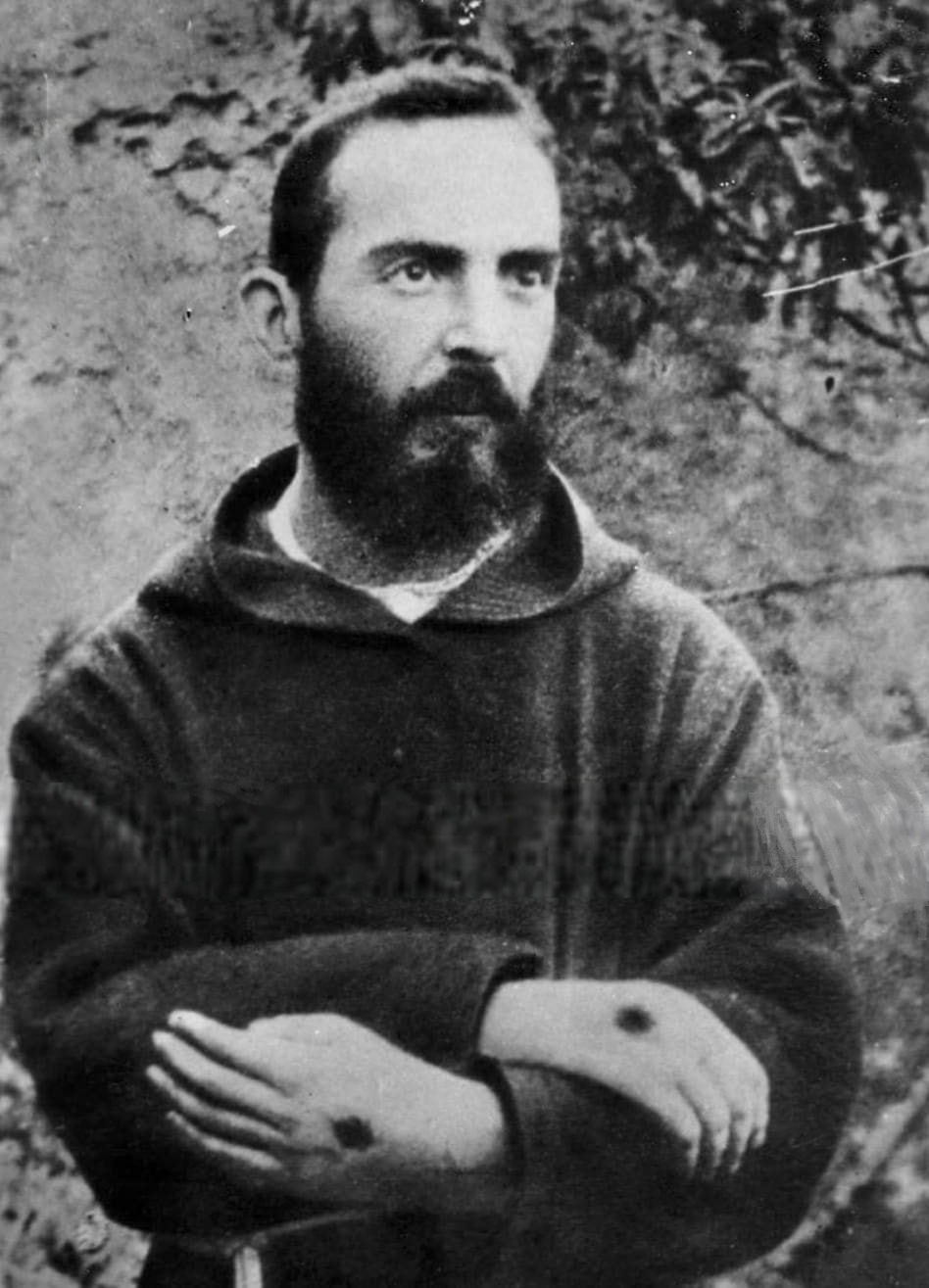
Francesco Forgione was born on May 25, 1887, at Pietrelcina in southern Italy, the son of Grazio Forgione and Maria Giuseppa De Nunzio, and was baptized the next day. The family were poor farmers; Grazio worked for a time in America to pay for Francesco's schooling. At sixteen, on January 6, 1903, Francesco entered the Capuchin (a strict branch of the Franciscan friars, founded 1525) novitiate at Morcone, took the habit on January 22 as Brother Pio, and later made solemn profession. Pio was ordained a priest at Benevento on August 10, 1910. Frail health kept Pio at home with the family until 1916, when Pio was sent to the friary of Our Lady of Grace at San Giovanni Rotondo and remained there until death.
On September 20, 1918, while praying before a crucifix, Pio received wounds in the hands, feet, and side that remained for about fifty years. Doctors examined them and disagreed about the cause. From the early 1920s the Holy See (the pope and the Vatican's central offices) restricted Pio's public ministry; for a time Pio was barred from saying Mass in public. Pio obeyed without complaint and kept silent under accusation. When the restrictions were eased, crowds came. For more than fifty years Pio welcomed penitents, heard confessions for long hours, and put the celebration of Mass at the center of the day. Pio liked to say that prayer is the key that opens God's heart, and wished only to be a poor friar who prays.
On May 5, 1956, Pio opened the Casa Sollievo della Sofferenza—the House for the Relief of Suffering—a hospital beside the friary for the sick and the poor. Pio died at San Giovanni Rotondo on the night of September 23, 1968, at eighty-one. Pope John Paul II, who as a young priest had made confession to Pio in 1947, beatified (declared 'Blessed', the step before sainthood) Pio in Saint Peter's Square on May 2, 1999, and canonized (officially declared a saint by the pope) Pio there on June 16, 2002. The feast is September 23.